
Outdoor lighting is often treated as a luxury, something that requires expensive fixtures, special wiring, and professional installation. In reality, a functional and durable outdoor light system can be built using basic materials and simple methods.
The main challenge with outdoor lighting is protection from water and moisture. Rain, humidity, and dust can quickly damage exposed bulbs and electrical connections. By focusing on protection first and appearance second, it is possible to create an outdoor light that lasts through changing weather conditions while remaining easy to maintain.
This approach relies on using sturdy, everyday items and arranging them in a way that keeps the electrical parts sealed. Instead of complex housings, plastic containers act as protective covers. When combined with proper placement and secure fixing, these containers become reliable shields against water. The result is a practical lighting solution that works well in gardens, backyards, pathways, or any outdoor area that needs consistent light after sunset.
Choosing and Preparing the Wooden Support
The foundation of the light system is the wooden pole. This pole does not need to be newly purchased or specially treated. A piece of wood already lying around in the garden can serve the purpose, as long as it is strong and free from serious cracks. The pole should be tall enough to spread light over a useful area but not so tall that it becomes unstable in the soil.
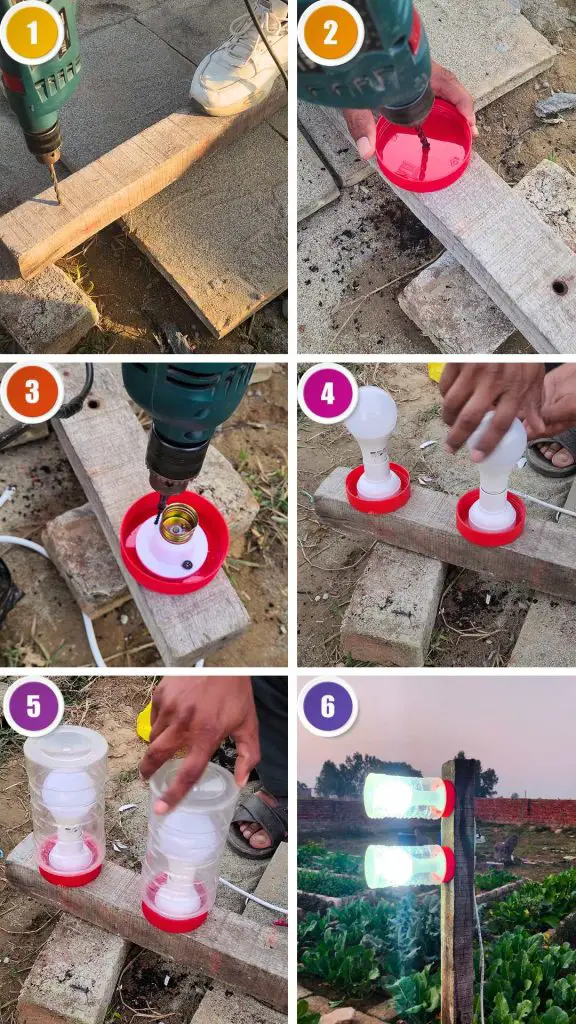
Before installing anything, the pole is checked for balance and strength. Any loose bark or weak sections are removed. Holes are then made in the pole at the points where the lights will be mounted. The number of holes depends on how many lights are needed.
Two lights on one pole provide a balanced spread and are suitable for medium-sized areas. The holes are placed with enough space between them so the light from one bulb does not block or overpower the other.
Using Plastic Containers as Protective Covers
Plastic containers play a key role in keeping the light system waterproof. Jam jars, tea containers, or similar plastic containers are ideal because they are lightweight, strong, and resistant to moisture. Clear or lightly colored containers work best, as they allow more light to pass through.
Each container is cleaned thoroughly to remove any residue or smell. A small hole is made in the center of each lid. This hole allows the electric wire to pass through while keeping the opening minimal.
A tight fit around the wire is important, as it reduces the chance of water entering the container. The lid itself becomes the main mounting point, so it needs to be strong enough to hold screws without cracking.
Fixing the Lids Securely to the Pole
Once the lids are prepared, they are positioned on the wooden pole at the drilled holes. The electric wire is passed through the pole and then through the lid. The lid is then fixed tightly to the wood using screws. This step is crucial because the lid must remain stable in wind and rain.
A properly fixed lid presses firmly against the wood, leaving no visible gaps. This tight contact helps prevent water from running behind the lid and into the container. The screws also provide enough strength to hold the weight of the container and bulb without bending or loosening over time.
Safe and Practical Wiring
Wiring is handled carefully to ensure both safety and reliability. The electric wire runs through the wooden pole and connects to both bulb holders. By connecting both holders to the same wire, the lights can be controlled together using a single switch. This simplifies the setup and reduces the number of connections that could fail.
Each wire connection is tightened properly inside the bulb holder. Loose connections can cause flickering, overheating, or complete failure, so this step is not rushed. Once connected, the bulb holders are fixed close to the lids. This prevents them from hanging freely and puts less strain on the wire. A stable holder also keeps the bulb properly aligned inside the container.
Selecting the Right Bulbs
Bulb choice affects both performance and safety. Energy saver or LED bulbs are preferred because they produce less heat and consume less electricity. Since the bulb is enclosed inside a plastic container, low heat output is important to avoid damaging the container over time.
The brightness of the bulb should match the purpose of the light. For pathways and general garden lighting, moderate brightness is enough. Extremely bright bulbs are not necessary and can create harsh lighting or glare. Once the bulbs are installed in the holders, they are checked briefly to ensure they work correctly before closing the containers.
Sealing the Containers for Weather Protection
After the bulbs are installed, the plastic containers are screwed onto the fixed lids. This step completes the waterproof enclosure. The container threads should be aligned properly so the container closes fully and evenly. A crooked or partially closed container can allow water to enter.
When sealed correctly, the bulb and holder sit entirely inside the container, protected from rain, dust, and insects. Water that hits the container flows down the sides instead of reaching the electrical parts. This simple enclosure acts as a shield while still allowing light to pass through the plastic walls.
Installing the Pole in the Ground
With the light system assembled, the wooden pole is placed in the ground. The hole for the pole should be deep enough to keep it stable, especially in windy conditions. Pressing the soil firmly around the base helps prevent movement.
The pole is positioned so the lights face the desired area. Once installed, the wire is connected to a power source, and the lights are turned on for testing. Any adjustments to angle or height are made before finalizing the setup.
Performance and Everyday Use
Once in use, the outdoor light system provides steady and reliable lighting. The enclosed bulbs remain dry even during heavy rain. Because the containers are easy to open, replacing a bulb or checking wiring is simple and does not require dismantling the entire setup.
This lighting method is especially useful in gardens, along pathways, near seating areas, or around small outdoor workspaces. The light output is soft and practical rather than harsh, making the area usable without disturbing the surroundings.