
Growing healthy, strong, and productive plants requires more than just watering. Plants need essential nutrients, a healthy soil environment, and the support of beneficial microbes to thrive. While chemical fertilizers are commonly used, they often damage the soil in the long run and can affect the quality of fruits and vegetables. Natural plant boosters provide a sustainable alternative, giving plants the nutrients they need while improving soil health.
One of the easiest and most effective ways to create a natural plant booster is by using kitchen waste, such as banana peels, combined with fermentation techniques. This method produces a nutrient-rich liquid that can improve plant growth, flowering, and fruit production. It is safe, inexpensive, and suitable for a variety of plants, from vegetables to flowering and fruiting plants.
Benefits of Using Natural Fertilizers
Natural fertilizers have multiple benefits over synthetic options. They provide essential nutrients in a form that plants can absorb easily, improve soil structure, and enhance microbial activity. Beneficial microbes in the soil help break down organic matter, releasing more nutrients for the plants while protecting them from harmful pathogens.
Using natural plant boosters also reduces waste by repurposing materials like banana peels, kitchen scraps, and other organic matter. This makes gardening more eco-friendly while giving gardeners an inexpensive solution to maintain soil fertility. Plants treated with natural fertilizers tend to have stronger roots, healthier leaves, more vibrant flowers, and higher fruit yields.
Preparing Banana Peel Paste
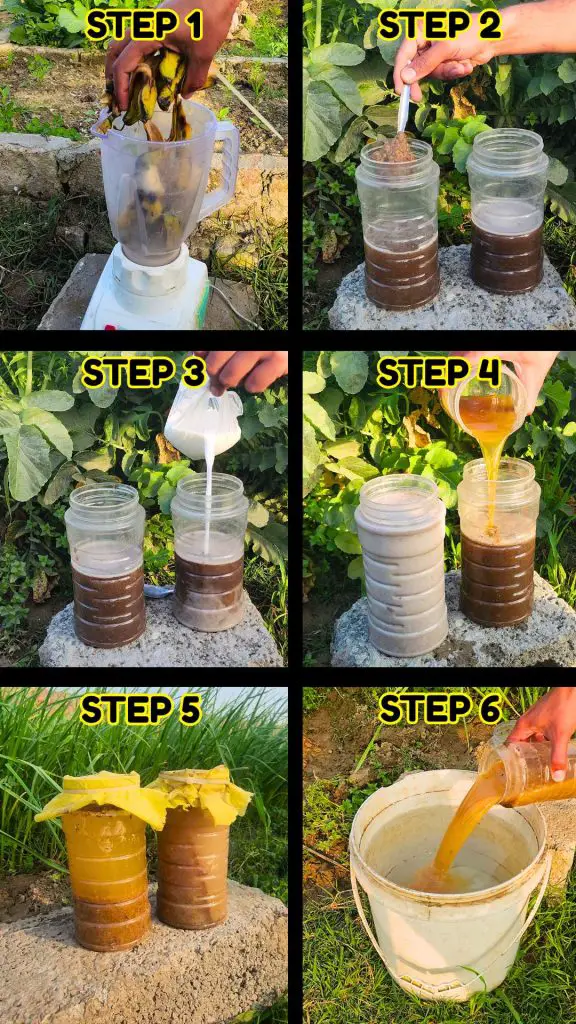
The first step in creating a natural plant booster is preparing banana peel paste. Peel six to eight ripe bananas and collect the peels in a blender. Add just enough water to help the blender run smoothly. Blend the peels into a thick, smooth paste.
The consistency should be thick enough to hold together but not too watery. A proper paste ensures better fermentation and nutrient retention.
Once blended, divide the paste into two non-metal containers. Add a small amount of water to each container and mix the paste well so that there are no large lumps. Mixing evenly helps the fermentation process begin uniformly, ensuring that all parts of the paste break down effectively over time.
Creating Different Fermented Mixtures
After preparing the banana peel paste, two different nutrient-rich mixtures can be created. In the first container, unpasteurized milk is added and mixed thoroughly. Milk provides proteins, calcium, and naturally occurring bacteria that help in breaking down the banana paste. The mixture gradually develops beneficial microbes that can improve soil health.
In the second container, a solution of brown sugar and water is prepared and mixed with the banana paste. Brown sugar acts as a food source for yeast and other fermenting microbes.
This mixture undergoes fermentation, producing a nutrient-rich liquid high in potassium, phosphorus, and other essential minerals. Both mixtures will create a powerful plant booster but in slightly different ways, giving plants a combination of nutrients and beneficial microbial support.
Fermentation Process
After mixing the ingredients, it is important to cover the containers with a breathable cloth rather than a tight lid. This allows gases produced during fermentation to escape while keeping mosquitoes and other insects away. Place the containers in a cool, shaded area, avoiding direct sunlight to prevent overheating and spoilage.
Fermentation is a gradual process. Over the first few days, you may notice bubbling and slight changes in smell, which indicates that microbes are actively working. As weeks pass, the mixtures darken and develop richer textures.
Waiting for about three weeks allows the ingredients to break down fully, producing a liquid rich in nutrients and beneficial bacteria. The longer the mixture ferments, the stronger and more concentrated the nutrients become.
How to Use Fermented Plant Boosters
Once the fermentation process is complete, the mixtures can be used as liquid fertilizers. One container can be poured into a bucket and diluted with water. Dilution is essential to prevent overwhelming the plants with concentrated nutrients. A typical ratio is one part liquid to ten or twenty parts water, depending on plant type and size.
Pour the diluted solution around the base of the plants so that the nutrients reach the roots directly. This promotes stronger root systems and healthier growth. Over time, the beneficial microbes in the mixture enrich the soil, making it more fertile and improving water retention. Repeated use of these natural fertilizers can significantly enhance plant health, flowering, and fruiting.