
Homemade liquid fertilizers are becoming more popular as gardeners look for affordable and natural ways to feed their plants. Plants need essential nutrients like nitrogen, phosphorus, and potassium to grow properly. When these nutrients are missing, plants struggle with weak stems, yellow leaves, and poor flowering.
Chemical fertilizers are widely available, but they are expensive and often damage soil health in the long run. Natural fertilizers, on the other hand, feed the soil while feeding the plants, strengthening the root system and increasing microbial activity. One of the most effective organic fertilizers that anyone can make uses banana peels, molasses, compost, and non-chlorinated water.
This blend creates a powerhouse nutrient solution that supports stronger growth, higher yields, and better plant health. It is simple, budget-friendly, and eco-friendly, converting kitchen scraps into a nutrient-rich garden booster.
Watch complete tutorial here
Why Make Fertilizer from Banana Peels
Banana peels are often thrown away as waste, but they contain valuable nutrients. They are rich in potassium, an essential nutrient that supports flowering, fruit development, and root strength. Plants that produce fruits like tomatoes, peppers, and eggplants need potassium for a successful harvest. Banana peels also contain calcium, which helps prevent blossom end rot and strengthens cell walls.
They include magnesium and other micronutrients that keep leaves green and support photosynthesis. When banana peels are blended into a liquid form, these nutrients become quickly available to plants. Instead of waiting for peels to rot in the soil, this method turns them into a fast-acting liquid food. Making fertilizer from banana peels also reduces organic waste, helping the environment.
The Role of Molasses in Plant Growth
Molasses is a by-product of sugar processing and is highly beneficial in gardening. It provides natural sugars, iron, sulfur, and minerals that feed beneficial microbes. Soil microbes are the hardest-working partners in any garden.
They break down organic matter, convert nutrients into digestible forms, protect roots from diseases, and improve soil texture. When molasses is added to a fertilizer mixture, microbial populations multiply rapidly. With more microbes, the soil becomes healthier and nutrients become more easily available.
Molasses also helps improve plant color and prevents leaf yellowing because of its iron content. By adding sweetness to the mix, it fuels a powerful fermentation that enriches the fertilizer within hours.
Compost as the Source of Beneficial Microbes
Compost or fully decomposed manure is the backbone of this fertilizer. It contains enormous populations of living microorganisms such as bacteria, fungi, protozoa, and beneficial nematodes. These organisms are responsible for decomposition and are essential for nutrient cycling.
Fully decomposed compost contains a complete balance of macronutrients like nitrogen, phosphorus, and potassium. Nitrogen supports leafy growth, phosphorus helps root development and energy transfer, and potassium ensures fruiting and overall plant strength.
Compost also includes micronutrients like zinc, copper, manganese, and boron, which are needed in small amounts but play huge roles in plant health. Additionally, compost improves soil structure, making it looser and better able to hold moisture. Adding compost to the liquid fertilizer provides a living colony of microbes ready to activate and reproduce during fermentation.
The Importance of Using Non-Chlorinated Water
Water acts as the base that carries nutrients and microbes to the roots. However, regular tap water often contains chlorine, a chemical added to make water safe for drinking by killing harmful bacteria. Unfortunately, chlorine also kills beneficial bacteria that plants rely on.
That is why non-chlorinated water is recommended for making organic liquid fertilizer. Rainwater, filtered water, or water that has been left uncovered overnight to let chlorine evaporate is ideal. This ensures that when the compost is added, the microorganisms stay alive and continue multiplying to create a rich bio-fertilizer.
The Fermentation Process and Microbial Growth
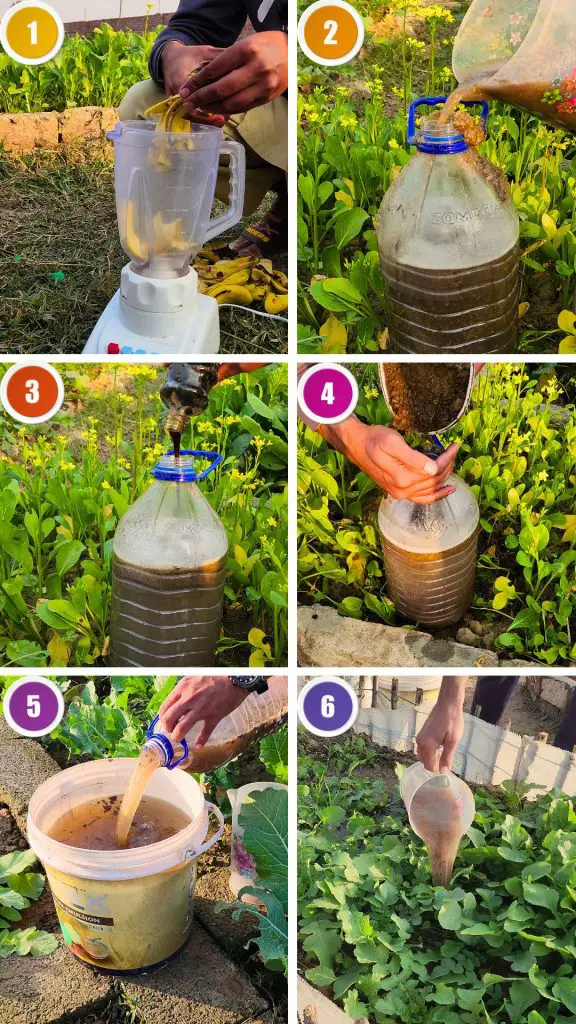
After mixing banana peels, molasses, compost, and water, the fermentation process begins. Fermentation is a natural breakdown carried out by microorganisms. As microbes consume sugars from the molasses and nutrients from the banana peels, they multiply rapidly.
This microbial boom creates billions of tiny workers ready to support plant health. Fermentation also unlocks nutrients and converts them into water-soluble forms that plants absorb easily. During fermentation, gases like carbon dioxide are released, which is why a small hole in the bottle cap is necessary.
If the bottle stays sealed tightly, pressure can build and cause an explosion. In just 24 hours, the fertilizer becomes a strong, living nutrient solution containing beneficial microbes and liquid minerals. This microbial fertilizer not only provides nutrients but also inoculates soil with beneficial life forms that stay active long after application.
How Plants Benefit from This Liquid Fertilizer
The benefits of using this homemade fertilizer extend to almost every aspect of plant growth. One of the most noticeable improvements is faster and greener growth. Plants fed with liquid fertilizers absorb nutrients instantly through their roots. The high potassium content supports blooming and fruiting plants, increasing the number and quality of fruits.
Calcium from banana peels helps prevent common problems like blossom end rot in tomatoes and peppers. Magnesium contributes to the deep green color of leaves by supporting chlorophyll production. Iron from molasses prevents yellowing and boosts overall plant health.
The living microbes from compost protect roots from harmful pathogens, improve nutrient uptake, and help plants build stronger immune systems. With consistent use, plants become more resistant to drought, disease, and environmental stress. Even houseplants show improvement in leaf shine, root development, and new growth.